Philodendron Yellow Leaves
A philodendron-specific guide to yellow leaves, including overwatering, low light, dry soil, pests, old leaves, and next steps.
Continue this diagnosis
Choose the next useful check
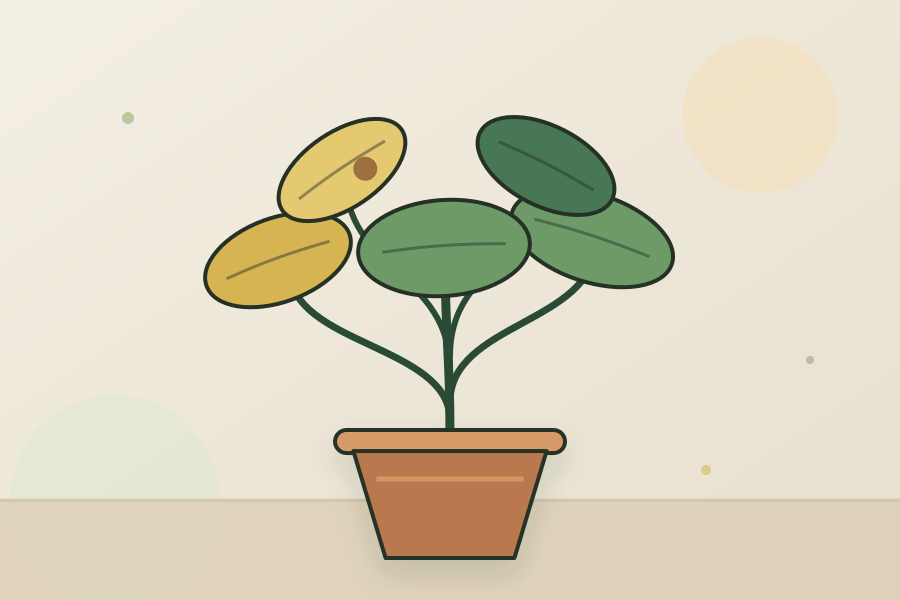
Philodendrons are forgiving aroids, but yellow leaves still mean you should read the pattern. One old yellow leaf on a long vine may be normal. Several yellow leaves, yellowing after watering, or yellow new growth points to a care issue.
Start with old leaves versus new growth
Older inner leaves can yellow as vines age or as the plant redirects energy toward the growing tips. New yellow leaves are more concerning because they may point to roots, pests, or poor light.
Also check whether the plant is becoming leggy. Sparse vines with smaller leaves often mean the plant wants brighter indirect light.
For vining philodendrons, follow the stem rather than judging a single leaf. If the oldest leaf at the base of a long vine yellows while the growing tip looks healthy, the plant may simply be shedding. If several leaves along the same vine yellow after watering, the pot setup deserves a closer look.
Most likely causes
Wet soil
Philodendrons like moisture but still need air around roots. If the soil stays wet and lower leaves yellow, pause watering. Check drainage holes and any water trapped in an outer pot.
Low light
Low light slows growth and water use. A philodendron in a dim corner may yellow because the pot stays damp too long. Move it closer to bright indirect light and adjust watering afterward.
Dry soil
If the pot is light, leaves droop, and the mix is dry, yellowing may follow drought stress. Water deeply and let the pot drain.
Pests
Check nodes, new leaves, and undersides for mites, thrips, mealybugs, or scale. Distorted new growth, sticky residue, webbing, or specks should prompt isolation.
How to confirm the cause
Start with the pot. Philodendrons are often sold in dense nursery mix and then slipped into decorative containers. If the nursery pot sits in hidden water, yellowing can continue even when your watering amount seems normal.
Then check the newest leaves. Small, pale, distorted, or marked new growth pushes pests and root stress higher on the list. Healthy new leaves with only one yellow older leaf usually points to aging or a mild care adjustment rather than a plant emergency.
What not to assume
- Do not assume every yellow leaf means root rot.
- Do not water again if the mix is damp.
- Do not fertilize yellowing new growth before checking pests.
- Do not ignore long bare stems; light may be part of the pattern.
Next action
Check soil moisture, drainage, light, and pests. Remove fully yellow leaves once you know the cause. If the plant is leggy, improve light before pruning. If yellowing is tied to wet soil, let the pot dry and change the watering rhythm.
If the vine is long and bare, do not solve that with fertilizer first. Move the plant into brighter indirect light, let watering match the new drying speed, then prune or propagate only after the plant is stable.
Healthy new leaves and slower yellowing are the signs that the philodendron is back on track.