Plant-Specific Guides3 min read
Rubber Plant Dropping Leaves
Rubber plants drop leaves after watering swings, low light, cold drafts, moves, pests, or root stress.
Read the guidePlant + symptom guide
Brown spots need texture and location checks. Dry window-facing spots, soft spreading lesions, and pest speckling point to different next steps.
For rubber plant, adjust the diagnosis around this plant profile: Rubber plants drop leaves from light changes, watering swings, cold drafts, or root stress. Sudden leaf drop usually follows a recent environmental change.
Check whether spots are dry and tan, soft and spreading, or tiny and speckled.
Notice whether damage is strongest on the window-facing side.
Inspect undersides and new growth for residue, dots, or webbing.
Look for a recent move, cold draft, or heat vent exposure.
Check whether leaf drop follows watering or dry-down.
Move out of harsh direct sun if damage lines up with the window.
Isolate the plant if pest signs appear.
Avoid cutting every spotted leaf until the cause is stable.
Compare nearby signals
Recommended reading
Rubber plants drop leaves after watering swings, low light, cold drafts, moves, pests, or root stress.
Read the guide
Low light usually causes slow, leggy growth and wet soil. Too much light causes scorch, fading, and crisp patches on exposed leaves.
Read the guideBefore you throw the plant away, separate water stress, root rot, pests, light problems, temperature stress, and normal leaf loss.
Read the guide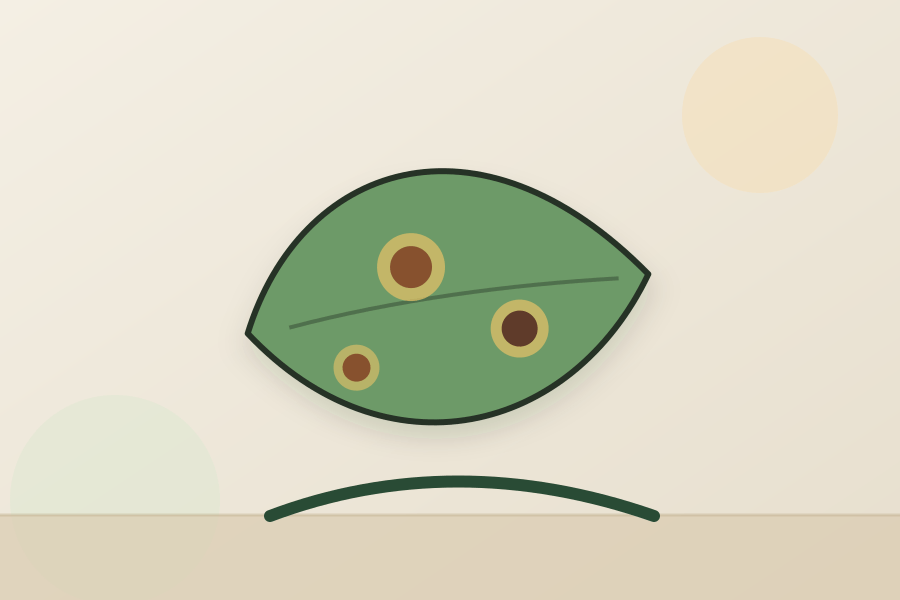
Brown spots on a fiddle leaf fig can come from root stress, dry patches, sun scorch, edema, pests, or physical damage. Location and texture help narrow it down.
Read the guideBrown tips are usually repeated stress at the leaf edge. Brown spots can point to scorch, pests, root problems, edema, or physical damage.
Read the guide
Curling leaves can signal dry soil, heat, pests, low humidity, overwatering stress, or too much light. The direction and timing help.
Read the guide